When I say I'm an astrologer, people assume two things: that I read the future, or that I blame everything on Mercury retrograde. Neither is true.
The astrology I practice has nothing to do with newspaper horoscopes. It doesn't predict events. It doesn't tell you what's going to happen on Tuesday. And it doesn't reduce eight billion people to twelve generic profiles.
So what is psychological astrology?
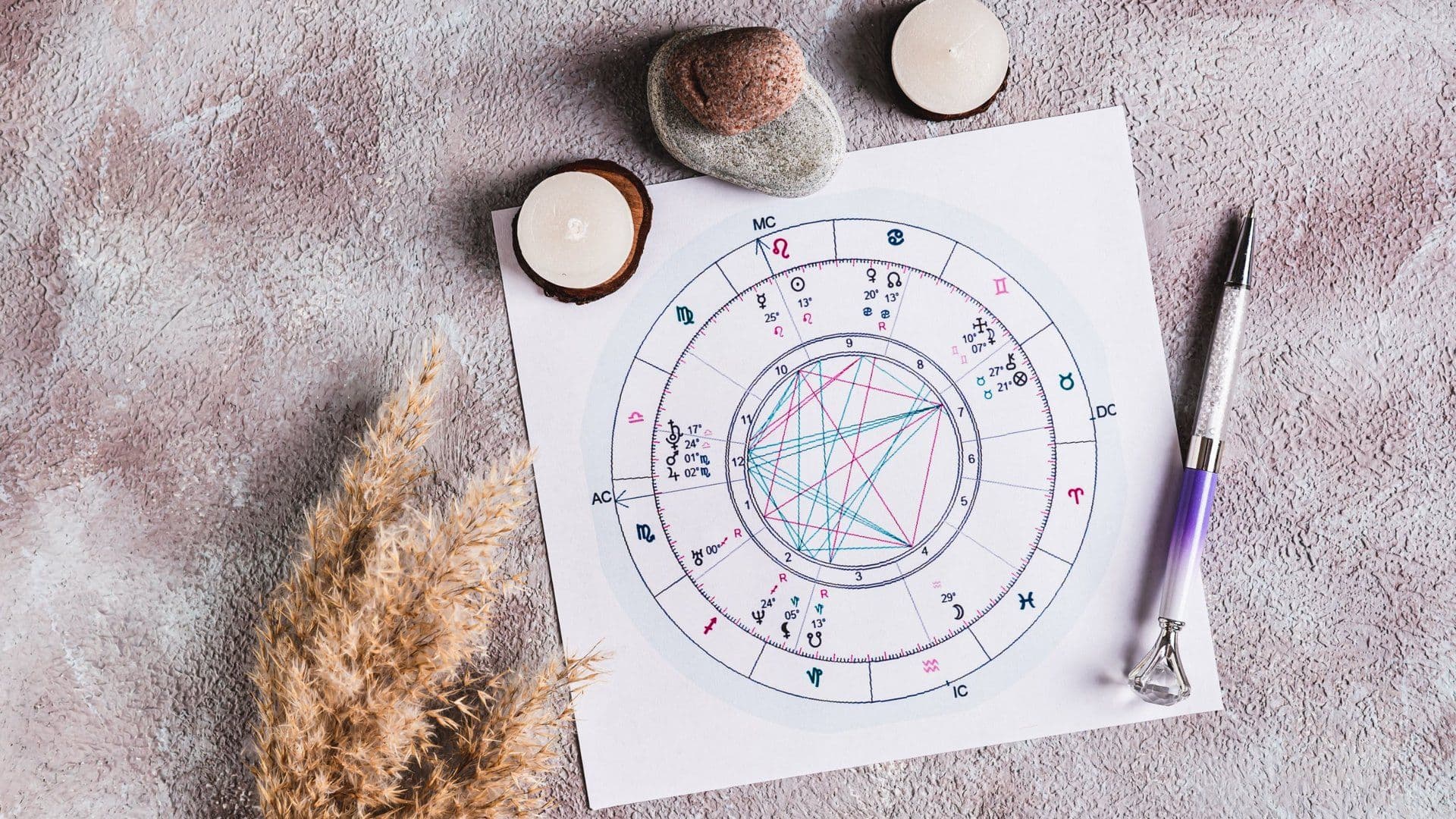
It's a self-knowledge tool. It uses your natal chart — the map of the sky at the exact moment you were born — as a mirror of your psychological structure. Each planet represents a psychic function. Each sign, a way of expressing that function. Each house, a life area where that energy manifests.
It's not magic. It's not religion. It's not science in the empirical sense. It's a symbolic language with over two thousand years of development that, when used well, reveals patterns that would otherwise go unnoticed.
What psychological astrology is NOT
It's not divination. It doesn't tell you whether you'll meet someone in May or whether you should take that job. It doesn't operate on the level of concrete events.
It's not determinism. Your natal chart is not your destiny. It's your starting point. What you do with it depends on you, your history, your context, your decisions.
It's not entertainment. It's not a fun personality test to share on Instagram. It's a serious tool that, in competent hands, can be profoundly revealing.
So what is it for?
To see what you already know but haven't articulated. To name patterns you repeat without understanding why. To stop judging yourself for functioning a certain way and start working with it.
It helps you understand that your way of bonding isn't a flaw — it's Venus in Scorpio in the 7th house and it has a logic. That your difficulty with commitment isn't laziness — it's Uranus conjunct the Sun and it needs space to function.
It doesn't give easy answers. It doesn't tell you what to do. But it illuminates the terrain so you can decide with more information about yourself.
Why does it work?
Not because planets "cause" things in your life. But because astrological language, built over centuries, offers a system of categories rich and nuanced enough to describe the complexity of the human psyche.
It works like any good model: not because it's "true" in an absolute sense, but because it's useful. Because it lets you see things you couldn't see before. Because it organizes experience in a way that generates understanding.
What about horoscopes?
Horoscopes are to astrology what fortune cookies are to philosophy: an extreme simplification for entertainment purposes. They're not astrology. They're marketing.
Your sun sign — Aries, Taurus, Gemini — is just one of hundreds of factors in your natal chart. Reducing your psychological experience to that is like reducing a symphony to a single note.
The astrology I practice
It's a conversation. Not a lecture, not a prediction, not a performance. It's sitting with your natal chart as a map and talking about what you see when you look at yourself honestly.
It's for people who want to understand themselves better. Who are willing to look without judgment. Who aren't looking for someone to tell them what to do — but for tools to decide for themselves.
If that resonates with you, you're probably in the right place.