There's a tension almost everyone knows, though it's rarely named. Being in a group — a family, a team, a circle of friends — and noticing there's a part of you that stays outside so you can fit in. Or the opposite: defending your difference so hard that you end up watching belonging through the window.
Being yourself and being one of your people. Shining and belonging. Almost nobody has both solved at once.
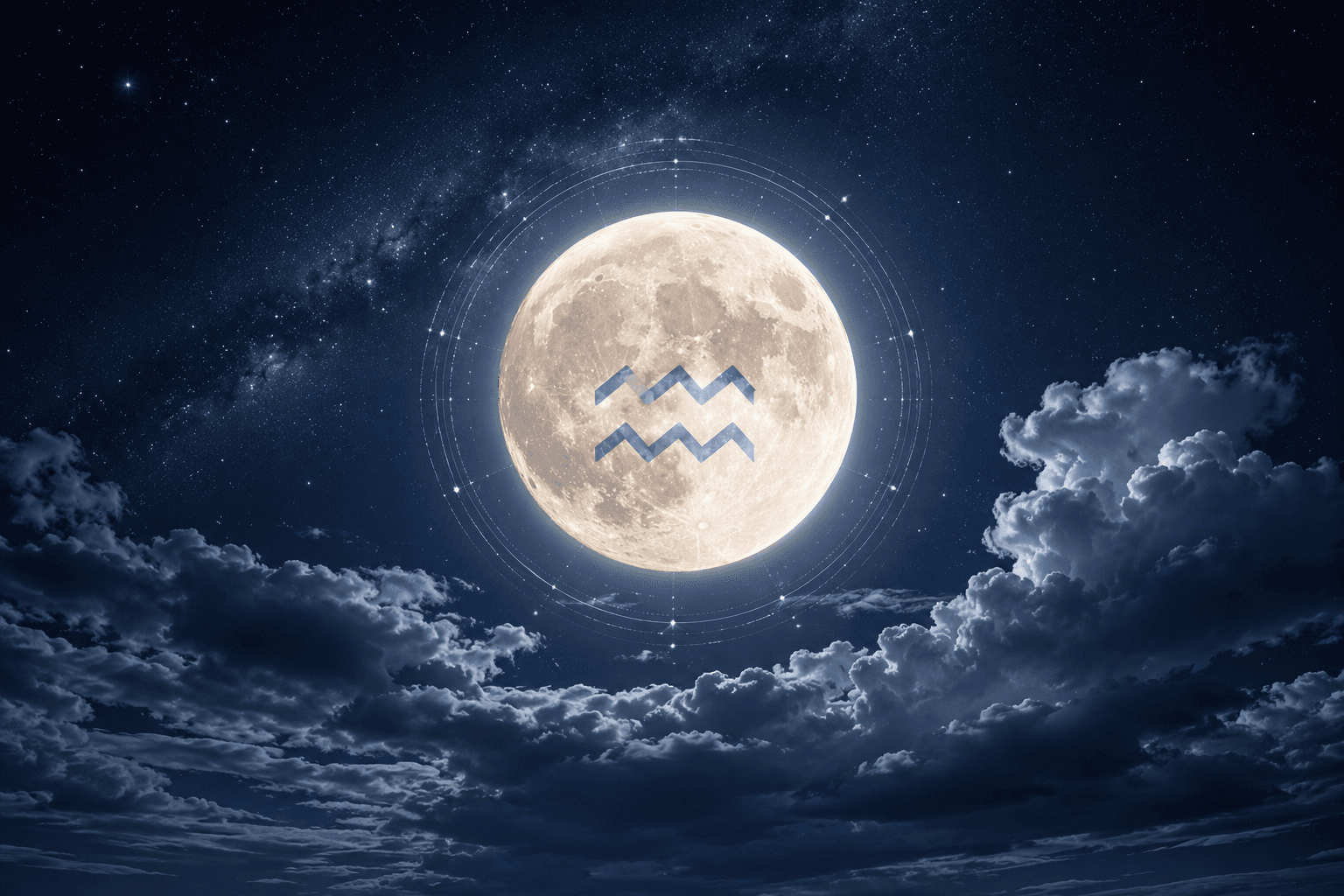
That is, exactly, the axis lighting up this week. On Wednesday, July 29 there's a Full Moon in Aquarius, and it arrives with unusual company on both sides of the sky. First the facts, then the process they describe — which this month, on top of everything, is only the first chapter of a longer story.
The facts: what's in the sky on July 29
The Full Moon becomes exact on Wednesday, July 29, 2026 at 6°30' of Aquarius, around 2:36 PM universal time — mid-morning across much of the Americas, mid-afternoon in Europe. Like every Full Moon, it's an opposition: the Moon at one end of the sky, the Sun at the other, at 6°30' of Leo.
But this time neither of them is alone. Next to the Sun, at its very same degree, is Jupiter: the two meet that same day in an exact conjunction in Leo that half the internet is calling the luckiest day of the year — I write about that meeting, and about why the label promises more than it can deliver, in a separate article. And next to the Moon, a couple of degrees away, is Pluto, which has been moving through Aquarius for a while now.
One more detail, for those who follow the sky closely: this is the first Full Moon since the lunar nodes changed axis and entered Leo–Aquarius. If that rings a bell, it's because it's the same axis where the total solar eclipse of August 12 takes place. We'll come back to this at the end.
The Leo–Aquarius axis: shining and belonging
Every Full Moon faces two opposite signs, and the psychological reading lives in the dialogue between them, not in either one alone.
Leo, as a process, is the building of what's yours: what you create, what sets you apart, the part of you that needs to express itself and be seen. Aquarius, its opposite, is the process of being part: the group, the community, the causes bigger than you, the freedom to be different inside a whole. They're not enemies. They're the two poles of one question: how much of you fits in the places you belong to?
A Full Moon in Aquarius lights up that axis from the side of the collective. With the Sun and Jupiter together in Leo, the other pole is especially charged: individual expression, enlarged. The scene this sky draws is recognizable in almost anyone's life: the moment when what you want to be collides — or negotiates — with what your environment expects of you. Your family's opinion of your project. The role your group assigned you years ago that now fits too tight. The difference between having followers and having community.
The Moon next to Pluto: why it can feel intense
Pluto's company adds a layer worth explaining well, because it's the ingredient that generates the most alarmist headlines.
In psychological astrology, Pluto describes the background processes: what transforms slowly, what was buried and comes to the surface, the power dynamics running through any bond. A Full Moon at its side announces nothing terrible. It describes an emotional intensity with roots: if something stirs you these days more than the situation seems to justify, the situation is probably just the door, and what's moving comes from further back.
That's not a threat. It's first-rate information. Disproportionate emotions are among the best maps there are, if instead of covering them you ask what they are proportionate to. What this Moon brings to light, it doesn't create. It only shows.
Where it touches you: the 6° of Aquarius in your chart
The question of the axis is universal; the stage where it's presented to you is not. That's decided by two pieces of your birth chart.
The first is the house where the 6° of Aquarius fall. If it's your 11th house, the terrain is your groups and shared projects. If it's the 3rd, your close environment and everyday conversations. If it's the 5th, what you create and how you show it. The house tells you where the light switches on; what exactly it reveals depends on how that point lives with the rest of your chart.
The second: if you have planets or points near 6° of the fixed signs — Aquarius, Leo, Taurus, Scorpio —, this Full Moon speaks directly with them, and what it illuminates will feel less abstract and more biographical.
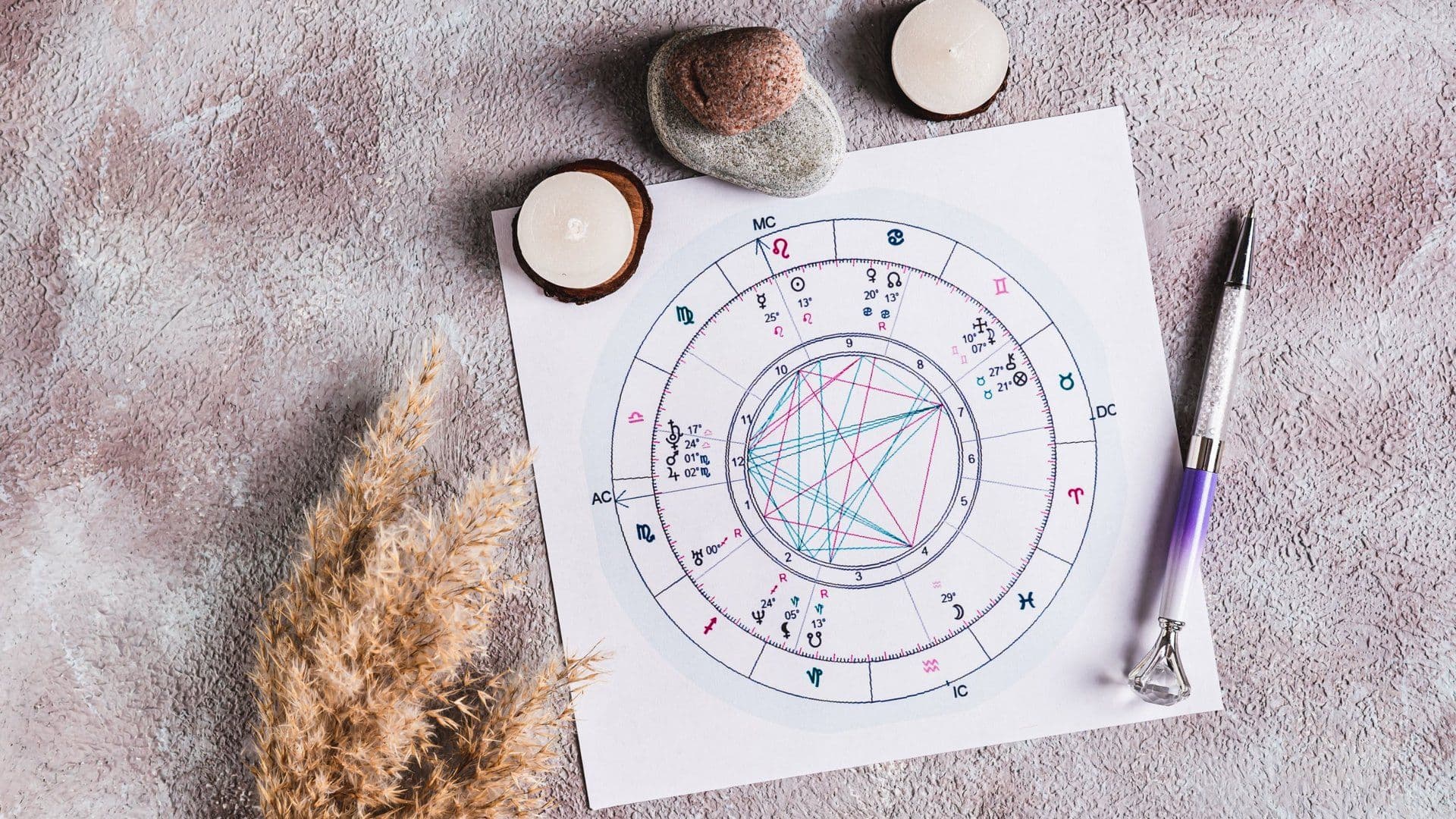
If you don't have your chart at hand, you can calculate it for free on this website and look for that point. It's the difference between reading about a Full Moon and finding it on your own map.
The first chapter of the August story
And here's why this Full Moon matters more than its headline suggests.
The lunar nodes — the points where eclipses happen — have just moved to the Leo–Aquarius axis, where they'll stay until 2028. This is the first full lunation of the new chapter. The next New Moon, on August 12, will be a total solar eclipse in Leo, visible from Spain. And the Full Moon after that, on August 28, will be a lunar eclipse in Pisces — the closing of the previous chapter.
In other words: the sky of July 29 is the prologue. The question this Moon switches on — how much of you fits where you belong, who you shine for — is the same one the August eclipses will repeat at full volume. If you want the complete map of that month, it's in the article about the August eclipses. And if you'd rather have each week's sky told to you like this, without alarms, I send an email on Sundays.
In the meantime, Wednesday needs no ritual. Just one honest question under that Moon: where in your life are you paying for belonging with parts of yourself?
I don't do magic. I do awareness.