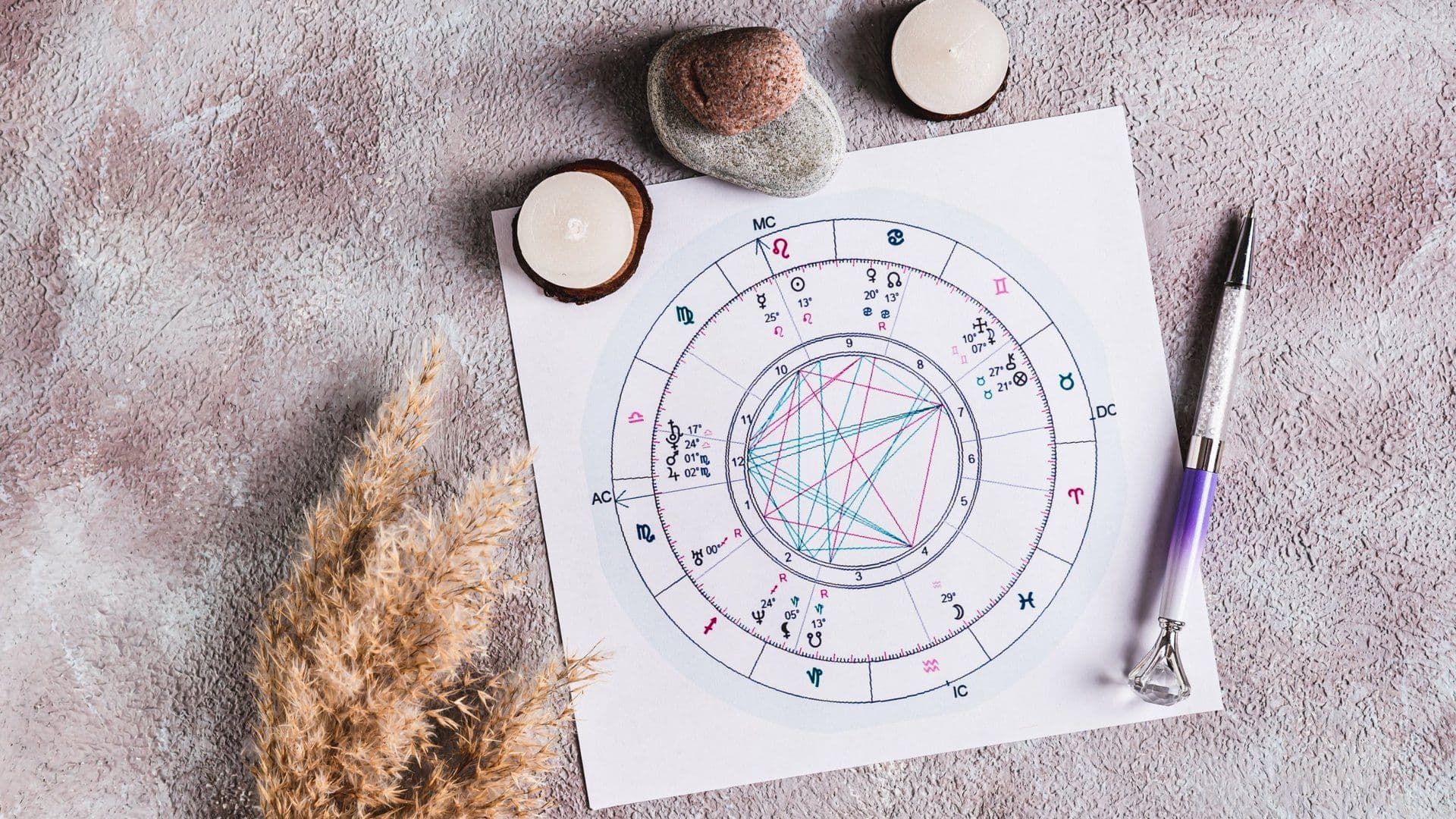
You look at your child and see things that don't quite match what you expected. They sleep differently from the way you slept. They get upset about things that wouldn't have moved you at all, or the other way round, they stay calm in a way that surprises you. At some point the question shows up, usually very quietly. Where did this little person come from?
A birth chart doesn't answer that with a verdict. It answers with a map. A child's chart doesn't say who they'll become or what will happen to them. It describes the ground they arrived with, their particular way of being in the world. Looking at it like that changes something very concrete at home. You stop reading as a problem what may simply be the way they work.
This article is for the beginning, when you open your child's chart for the first time and don't know where to look. You don't need to understand the ten planets or the twelve houses. Four pieces are more than enough to start seeing.
Why isn't their sign enough?
The first thing almost everyone tells you when your child is born is their sign. "An Aries", "a Pisces". Used that way, the information doesn't help much.
The sign people talk about is the Sun sign, the position of the Sun on the day they were born. The Sun matters a lot, but it is one layer of the chart. It speaks of the identity your child will build over the years, of what they are growing toward. In an adult you can already see it. In a child of three or seven it is still forming, and it works more like a direction than a portrait.
That's why an "Aries" child can seem shy to you, and a "Leo" can find it really hard to come out and say hello. Astrology isn't failing there. You were reading a single letter of a long word.
The other three pieces I suggest describe something that shows up earlier and more clearly in childhood. They speak of how your child feels, how they meet the unknown and how they process what you tell them. Let's start with the one you'll recognize most in everyday life.
What do they need to feel safe? The Moon
If you could only look at one point in your child's chart, I would look at the Moon.
In the chart, the Moon is the emotional world. It describes what gives them security, how they ask for comfort and what they need to lower their guard and rest. In adults the Moon tends to stay hidden behind what they've learned. A child wears it on the outside, in plain sight.
This is where the chart starts to be truly useful. The Moon helps you understand why what calmed you as a child doesn't calm your child. Security doesn't feel the same for every Moon.
A Moon in a fire sign, that is Aries, Leo or Sagittarius, tends to be associated with a need for movement and a quick response. The upset passes running down the hallway rather than sitting on your lap for ten minutes. A Moon in earth, in Taurus, Virgo or Capricorn, speaks of calm through the predictable: the same blanket, the same song, dinner at the same time. Water, in Cancer, Scorpio and Pisces, describes someone who needs their emotion recognized before it's solved. It helps when someone says I can see this hurts before suggesting anything. And the air Moon, in Gemini, Libra or Aquarius, often settles by talking, by putting words to what's happening.
It's a pattern that comes up a lot when I look at children's charts with their mothers and fathers. After a tantrum, the child refuses the hug. They pull away, go stiff, sometimes push. Whoever is raising them experiences it as a personal rejection. When the chart shows an air or fire Moon, the question shifts. Perhaps that child isn't rejecting affection, but contact at the exact moment they feel overwhelmed, and they need space or words first. The chart doesn't tell you what to do. It gives you another way of looking at the same gesture.
At no point does the Moon say your child is a fixed way. It says where they start from. A child with the Moon in Capricorn, who seems serious and contained when small, can perfectly well learn to express what they feel. The chart doesn't put a ceiling on them. It shows you which current they're swimming against, so you don't confuse what's hard for them with what they don't want.
How do they meet the world? The Ascendant
The Ascendant is the front door of the chart. It describes the first thing the world sees of your child and their instinctive reaction to what's new, to a person they don't know, to the door that opens.
To calculate it you need the exact time of birth, since it changes sign roughly every two hours. If you don't have it, look for it. In many countries it appears on the birth registration or in the hospital report. Without a reliable time, the Ascendant and the houses stay up in the air, and you're left with half the map.
Think of a birthday party. Some children walk straight into the middle of the room and some stay glued to your leg, watching before they let go, and the Ascendant helps you understand that difference. Neither is better. A fire Ascendant tends to dive right in. An earth one watches from the doorway. A water one feels out the emotional climate of the room before moving, and an air one comes closer by asking questions. It's their way of arriving, and knowing it saves you from pushing your child toward a way of being with people that isn't theirs.
What's interesting is that the Ascendant sometimes clashes head-on with the Moon, and that clash explains a lot of confusion. Some children have an Ascendant that looks very confident and a Moon that needs a lot of shelter. On the outside they seem brave, and on the inside they ask for more than they let on. If you only trust what you see at the door, you miss what's happening in the next room. It's one of the most misunderstood points in the chart, which is why I gave it a whole article.
How do they think and learn? Mercury
Mercury is the mind in the chart. It describes how your child takes in information, how they organize it and how they give it back. In childhood this has a very concrete translation: their way of learning and of listening.
There are quick Mercuries, in children who jump from one idea to the next and get bored if you repeat something they understood the first time. And there are slower Mercuries, in children who need to chew on information. They don't answer straight away, and it isn't that they don't know. They're building the answer inside, and hurrying them tends to work against them.
The sign of Mercury gives clues about the channel. In earth, it describes someone who learns by touching and doing, with examples they can see and handle. In air, they learn by talking and asking, and want to understand the why before accepting the what. Fire learns when something excites them and switches off with what bores them. Water absorbs through the atmosphere and remembers what they felt better than what they were told.
I want to be clear about one thing here. I'm an astrologer, and Mercury describes a tendency, not a diagnosis. If you notice your child has a real and lasting difficulty paying attention, reading or communicating, the chart doesn't replace a professional assessment. That belongs to a pediatrician or a specialist. Astrology accompanies the way you look. It doesn't replace it. What Mercury can do is take away the idea that your child learns badly, when they may simply learn differently from the way you were taught.
How to read the four pieces together
Now you have all four. The Sun, where they're growing. The Moon, what they need to feel safe. The Ascendant, how they meet the world. Mercury, how they think. The mistake would be to read them as four separate labels.
A chart is read as a conversation. Imagine a water Moon that asks for shelter, with a fire Ascendant that looks bold and an air Mercury that needs to talk everything through. That describes a particular child, not the sum of three textbook sentences. What's worth seeing appears when you notice how the pieces pull on one another. Where your child contradicts themselves, where what they show covers what they feel, where their way of thinking opens doors and where it tangles them up.
Beyond each piece of information, the chart gives you back, as a mother or a father, the right distance. You stop taking personally what is simply their way of being in the world. When you understand that your child isn't contradicting you on purpose, that they run on pieces different from yours, the tone of many conversations at home changes.
I don't do magic. I do awareness. Your child's chart doesn't tell you what will become of them. It helps you see them as they arrived, so you can accompany them without trying to fix what isn't even broken.
If you'd like to start, calculate their chart for free on the website. With their birth details you'll have the four pieces in front of you in a minute. And if you'd rather we look at their chart calmly, in full and applied to what's happening at home, consultations are open.
Which of these four pieces do you think describes your child best today?
Calculate your child's birth chart for free at isaferrer.com. Without the time of birth, the calculator gives you the planets but not the Ascendant. If you'd like to go over what a birth chart is first, you'll find it in this article.