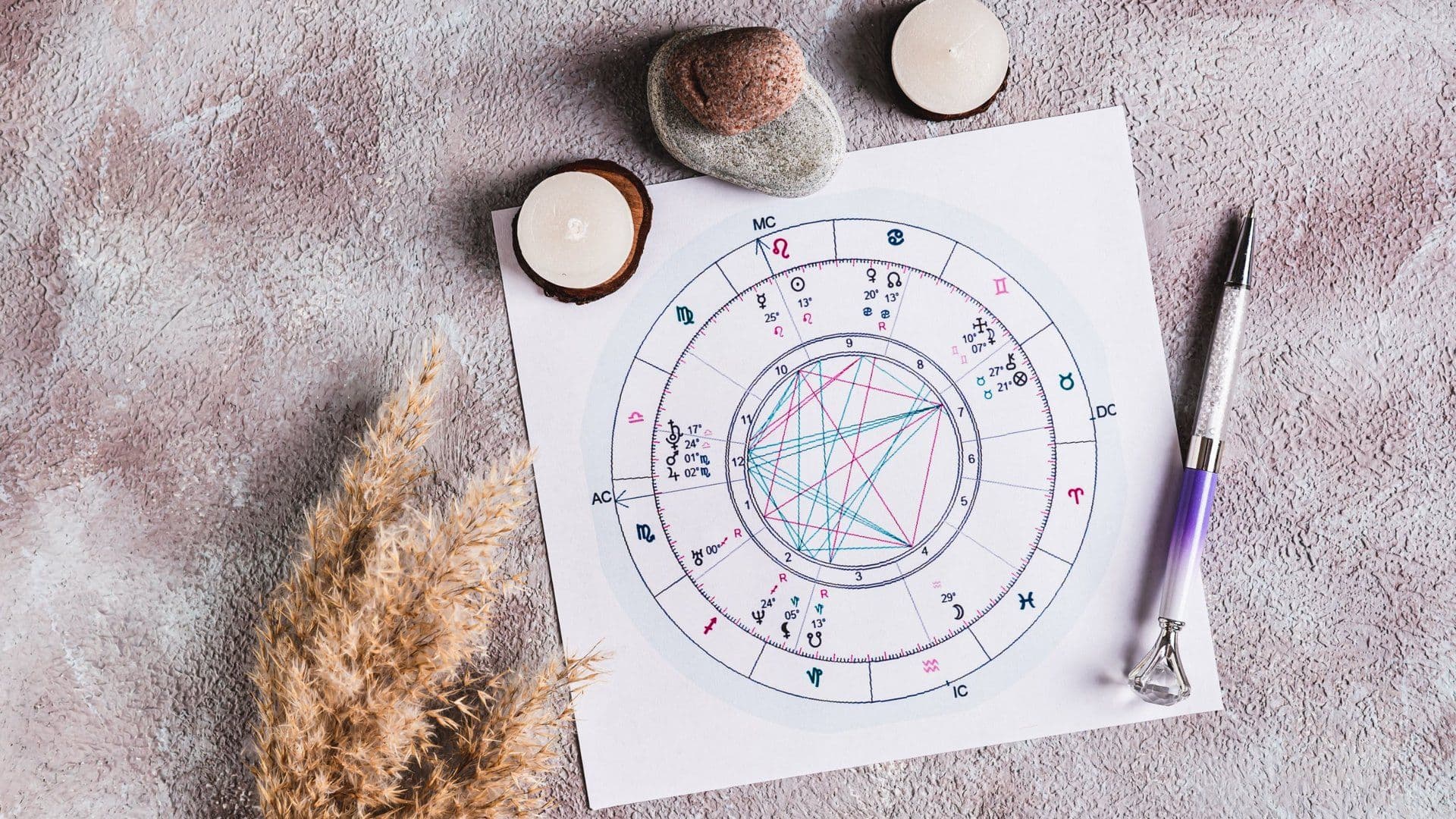
Your natal chart is fixed. It's the photo of the sky when you were born. But the sky didn't stop when you arrived. The planets keep moving. And when today's planets form significant angles with your natal chart planets, something activates. That's a transit.
Transits don't predict events. They don't say "on Tuesday you'll meet the love of your life." What they say is: "there's a psychological process activating in this area of your life. Pay attention."
How transits work
Imagine your natal chart is a building with many rooms. Each room has a door. A transit is like someone knocking on one of those doors. Sometimes they knock gently (trine). Sometimes they pound (square). Sometimes they enter without asking (Pluto conjunction).
What happens when the door opens depends on what's in that room — meaning, what's in your natal chart at that point. The transit activates what's already there. It doesn't create anything new. It illuminates what already existed.
Fast vs. slow transits
The Moon transits your entire chart in 28 days. Its effects are fleeting — mood shifts, one day more emotional than another. Mercury, Venus, and Mars are also fast. Their transits last days or a few weeks.
The transits that truly transform are from slow planets: Jupiter (one year per sign), Saturn (two and a half years), Uranus (seven years), Neptune (fourteen years), Pluto (up to twenty years).
When Saturn squares your Sun, it's not a bad day. It's a two-year process where your identity confronts reality. When Pluto transits your 7th house, it's not a fight with your partner. It's a profound transformation of your entire way of relating.
Life's great transits
There are transits everyone experiences at similar ages:
Saturn Return (~29 years): Saturn returns to where it was when you were born. It's the passage to real adulthood. Where you stop living according to others' expectations and start building your own structure.
Uranus Opposition (~42 years): The famous "midlife crisis." Uranus demands liberation, authenticity, breaking with what no longer works.
Second Saturn Return (~58 years): Review of the structure you built. Does it still serve you? What needs rebuilding?
How do you work with transits?
You don't avoid them. You don't fight them. You transit them — hence the name. The work consists of understanding what process is being activated and what it needs from you.
If Saturn is transiting your 10th house, it's not the time to resist work. It's the time to ask yourself whether your current vocation reflects who you really are — and if not, to make the necessary adjustments even if they're uncomfortable.
If Neptune transits your Sun, it's not that "everything is confused." It's that you're in a process of dissolving an old identity that no longer serves you. It's uncomfortable, yes. But necessary.
Transits and free will
A transit doesn't force you to do anything. It signals an available energy, an activated process. What you do with it is your decision. Two people with the same transit can live it in radically different ways depending on their level of consciousness, their history, and their choices.
Astrology doesn't remove agency. It amplifies it. Because when you know what process is being activated, you can work with it instead of against it.
When to consult transits?
When you feel something moving inside and don't know what it is. When a period of your life feels different — heavier, more confusing, more intense — and you don't understand why. Transits don't give answers, but they give context. And sometimes, knowing you're in a legitimate process — one that has a beginning, middle, and end — is enough to stop resisting.